
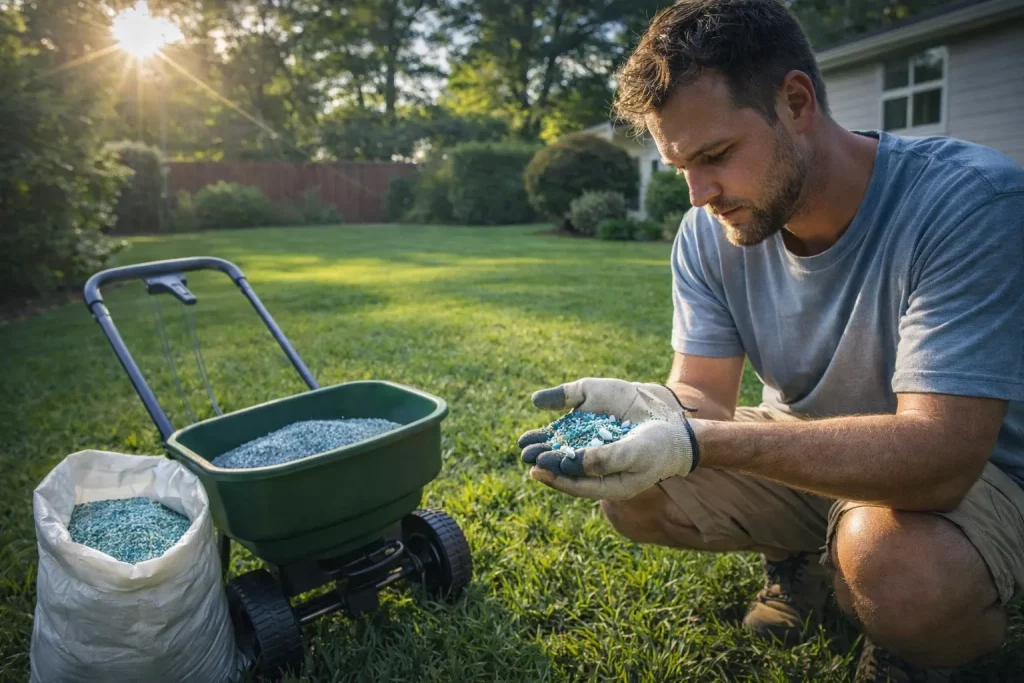
I’m Kayla, and I’m picky about grass. I live in a hot place with full sun most days. Bermuda is my lawn of choice. It’s fast. It’s tough. But it’s hungry. I’ve tried cheap stuff, fancy stuff, and a few “oops, that burned” moments. Here’s what actually worked on my lawn, with real results you can use. For the full play-by-play of every product test, you can peek at my step-by-step notes in this in-depth breakdown any time.
If you want a quick pulse on which lawn-care products homeowners are raving about this week, take a peek at Popdex before you hit the store.
My yard, my goals
- Front yard: about 5,000 square feet.
- Full sun, heavy clay soil.
- Mowed at 1 to 1.25 inches with a reel mower.
- Dog, kids, and weekend soccer. So it gets beat up.
I wanted deep green, tight growth, and strong roots. Also, I didn’t want the water bill to cry.
My top pick: The Andersons PGF Complete 16-4-8
This one gave me the best, most even green.
- What I did: Last May, I put down 4 pounds per 1,000 square feet. I used a Scotts EdgeGuard Mini spreader at setting 3.5. I watered it in for 20 minutes.
- What I saw: In 6–7 days, the color deepened. In two weeks, the lawn felt “thicker” underfoot. Not spongy—just tight and dense.
- Why I liked it: It has slow-release nitrogen, so the growth wasn’t a wild burst. It also has a bit of phosphorus and potassium, plus humic material. That seemed to help color and root feel. No burn spots.
- The catch: It costs more than the big-box house brands. But it lasted, and the color held steady.
If I could only buy one, this is the one.
Budget winner: LESCO 15-0-15 (southern stores and site one)
When summer heat kicks in, potassium matters. This bag has it.
- What I did: I used it in July at 3 pounds per 1,000. I watered right after.
- What I saw: No surge. Just steady growth and less tip burn in heat. The lawn didn’t gray out between cuts.
- Why it’s good: Slow-release N, no phosphorus (Bermuda often doesn’t need P unless a soil test says so), and solid K for stress.
- Heads-up: It’s more “pro” style. Labels are plain. Read the rate twice. Ask the counter staff if you feel unsure. I did.
Easy-to-find boost: Scotts Turf Builder Southern Lawn Food
This one is the “grab it at the store on the way home” choice.
- What I did: Early June, 3.5 pounds per 1,000. Watered in right away.
- What I saw: Quick green in a week. It went a tad fast if I watered heavy, so I tightened my mow schedule to every 3–4 days.
- Why it’s handy: It’s everywhere. It greens fast. It’s simple.
I rushed in, grabbed a bag off an endcap—no time for second guesses. That panicked dash reminded me of the high-stakes energy of sorority rush season back in college—minus the glitter, plus the grass stains. - Watch-outs: Don’t stack it with another high-N product that same month. Bermuda can take it, but your mower might not love you.
Slow and safe: Milorganite 6-4-0 (my “kid and dog” weekend choice)
When I want gentle feeding and less worry, I use this.
- What I did: Late May and again in late June, 12.5 pounds per 1,000.
- What I saw: A soft, natural green. No burn. It helped fill barefoot spots where the kids drag their heels.
- The truth: It smells a little earthy on day one. My dog sniffed it and moved on. Color is not neon, but it’s even and forgiving.
Quick splash of green: Simple Lawn Solutions 16-4-8 (liquid)
I keep a small bottle for “company is coming” weeks.
- What I did: Diluted per label and sprayed with a hose-end sprayer two days before a birthday party.
- What I saw: Fast color pop in 3–4 days. Not a full meal. More like a snack.
- Note: Don’t overdo liquids in peak heat. Light spray, even coverage, and water next morning.
For deeper color without wild growth: Iron
Two ways I’ve used it:
- The Andersons 7-0-0 with Iron granules in late spring: Easy to spread, helps color, doesn’t push height.
- Ironite 1-0-1 light rate in June: I got a nice blue-green tone in about a week.
I don’t mix iron with a heavy nitrogen day. I separate by a week to avoid odd stripes.
What didn’t work for me
- Straight urea 46-0-0 in July: I burned edges by the driveway. It’s hot stuff. It works in cool months if you’re careful, but I’m not that brave in summer.
- Weed-and-feed on tree roots: I tried it once years ago. The oak didn’t like it. Now I keep weed control and fertilizer separate.
How I apply (and avoid stripes)
- I blow off the lawn first. Leaves and sticks break your pattern.
- I walk north-south, then east-west at a slightly lower setting. Light overlap. Steady pace.
- I water within 20–30 minutes. If rain is due that day, I let the sky help.
- I sweep or blow granules off the driveway. It saves the river and saves your concrete from stains.
My simple Bermuda schedule
For a research-based, month-by-month overview of what Bermuda needs, the Bermudagrass Lawn Maintenance Calendar | NC State Extension Publications is a rock-solid benchmark that lines up well with the routine below.
- March: Soil test. I skip phosphorus unless the test says I need it.
- April: Pre-emergent (not a fertilizer, but it saves my sanity). First light feed if nights hold above 60°F.
- May: PGF Complete 16-4-8.
- June: Scotts Southern Lawn Food or repeat PGF if I have it.
- July: LESCO 15-0-15 for heat stress help. Maybe a light iron touch if color dips.
- August: Light feed only if growth slowed too much. I go gentle here.
- September: Last light nitrogen before temps slide. Then I back off.
If you’re juggling this timeline with a partner and need an easy way to nudge each other about the next feed or mow, hop into Instant Chat for Couples—it’s a dedicated space for two where you can set shared reminders, swap photos of the yard’s progress, and keep every lawn-care plan in sync.
If you garden in a hotter, drier part of the South, the Bermudagrass Home Lawn Management Calendar – Texas A&M AgriLife Extension Service gives region-specific tweaks that can help you dial in watering and nutrient rates. And speaking of North Texas, many weekend warriors in Garland look for ways to reward themselves once the yard is dialed in; if your idea of a reward leans more toward an unforgettable night on the town, you can browse a curated list of elite companions at TS escort Garland where you’ll find verified profiles, transparent rates, and discreet booking options to make planning your evening effortless.
I aim for about 0.5 to 1 pound of actual nitrogen per 1,000 square feet per month during peak growth. Slow-release is my friend.
Quick picks by need
- Best overall color and density: The Andersons PGF Complete 16-4-8
- Summer stress helper: LESCO 15-0-15
- Easy grab and go: Scotts Turf Builder Southern Lawn Food
- Kid-and-dog friendly vibe: Milorganite 6-4-0
- Fast party pop: Simple Lawn Solutions 16-4-8 (liquid)
- Deeper green, low growth: Ironite or a granular iron blend
A small digression on mowing
Bermuda loves being cut low and often. I keep it around 1 inch with a reel mower, and I sharpen the blades every season. If I slip and let it get tall, I raise the height a notch, then drop it back down the next cut. No scalping, no drama. It sounds fussy, but the lawn thanks you.
Final take
You know what? Bermuda isn’t picky about brand. It’s picky about timing, nitrogen type, and steady habits. For me, PGF Complete gave the best mix of color, density, and control. LESCO